My brother Nathan Taylor works with inner city youth. I applaud him for his work, and I also remind him of how ambitious of a task he is taking on. He normally responds that if he can change the life of one kid, that kid can change the life of another. By day Nathan works on pension plans, by night he spends time with young men at a juvenile rehabilitation center.
I'm proud of him for the work he does. He's investing in the lives of others, hoping and praying that he can gain a positive return. His reward is not money, but seeing young men develop and become productive people that can take care of their families and be of benefit to the community.
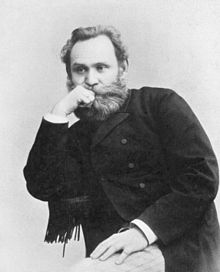
Which brings me to the concept of reinforcement. The first time I remember hearing this term was in high school. In this high school course, we covered a mix of topics in sociology and psychology. Then in college, I had a semester of psychology and I was reminded of one of my favorite topics. Pavlov's dog! Dr. Ivan Pavlov was a Russian physiologist that conducted groundbreaking research on the conditional reflex. Pavlov won the Nobel Peace Prize for his work in 1904.
A quick summary of one of Dr. Pavlov's experiment is as follows:
1) Observation: Dog's salivate before being fed
2) Experiment: Pavlov rings a bell, then serves the dog food
3) Result: Dog begins to salivate upon hearing bell ring
4) Conclusion: The dog has been conditioned to understand that a ringing bell leads to food
All seems very simple, but my summary doesn't do Dr. Pavlov's work justice.
Dr. Pavlov's was a master of physiology. However, these same basic principles can be used to describe our own human nature and general principles of sociology.
My mother is a social worker. I asked her the other night, how she feels about the concept of reinforcement. I asked her, in her career has she seen the impact of children receiving positive reinforcement versus children receiving negative reinforcement? She looked at me, and succinctly said YES! It all seemed so simple to me, but I wondered out loud, does our youth receive enough structure with positive reinforcement?
Sadly, when you consider all things, our society glorifies negativity and negative reinforcement. Its demonstrated when you watch television, read the newspaper, and look at the actions of people around us. Instead of killing people with kindness, we often see how people will just kill others with rudeness. This negativity however is rewarded when the person that is rude gets their way, while the person that is kind is walked over.
Positive reinforcement too me isn't making sure all the kids on the little league baseball team get a medal or a plaque at the end of the year. Its making sure to tell our youth good job when you graduate from high school. Or I'm proud of you for working hard and saving up money this summer to buy your books this fall for college. Reward the youth when they do the right thing, when they say the right thing, dress the right way, and treat others the way they want to be treated.
My brother Nathan is doing his part. I'm writing about his work, and thinking about how I need to do my part. We can all chip in, because I'm pretty sure Nathan can't do it by himself.
-SAB
I'm proud of him for the work he does. He's investing in the lives of others, hoping and praying that he can gain a positive return. His reward is not money, but seeing young men develop and become productive people that can take care of their families and be of benefit to the community.
Which brings me to the concept of reinforcement. The first time I remember hearing this term was in high school. In this high school course, we covered a mix of topics in sociology and psychology. Then in college, I had a semester of psychology and I was reminded of one of my favorite topics. Pavlov's dog! Dr. Ivan Pavlov was a Russian physiologist that conducted groundbreaking research on the conditional reflex. Pavlov won the Nobel Peace Prize for his work in 1904.
A quick summary of one of Dr. Pavlov's experiment is as follows:
1) Observation: Dog's salivate before being fed
2) Experiment: Pavlov rings a bell, then serves the dog food
3) Result: Dog begins to salivate upon hearing bell ring
4) Conclusion: The dog has been conditioned to understand that a ringing bell leads to food
All seems very simple, but my summary doesn't do Dr. Pavlov's work justice.
Dr. Pavlov's was a master of physiology. However, these same basic principles can be used to describe our own human nature and general principles of sociology.
My mother is a social worker. I asked her the other night, how she feels about the concept of reinforcement. I asked her, in her career has she seen the impact of children receiving positive reinforcement versus children receiving negative reinforcement? She looked at me, and succinctly said YES! It all seemed so simple to me, but I wondered out loud, does our youth receive enough structure with positive reinforcement?
Sadly, when you consider all things, our society glorifies negativity and negative reinforcement. Its demonstrated when you watch television, read the newspaper, and look at the actions of people around us. Instead of killing people with kindness, we often see how people will just kill others with rudeness. This negativity however is rewarded when the person that is rude gets their way, while the person that is kind is walked over.
Positive reinforcement too me isn't making sure all the kids on the little league baseball team get a medal or a plaque at the end of the year. Its making sure to tell our youth good job when you graduate from high school. Or I'm proud of you for working hard and saving up money this summer to buy your books this fall for college. Reward the youth when they do the right thing, when they say the right thing, dress the right way, and treat others the way they want to be treated.
My brother Nathan is doing his part. I'm writing about his work, and thinking about how I need to do my part. We can all chip in, because I'm pretty sure Nathan can't do it by himself.
-SAB
